


Wooden hot tubs are a classic staple. They're stylish, memorable, and iconic. The advancements in more efficient materials have provided a more solid and durable foundation for current hot tubs. However, some people prefer the classic look of a wood-burning hot tub, particularly cedar soaking tubs prized for their natural hydrotherapy benefits and off-grid compatibility.
Since polypropylene, fiberglass, and other materials were not available then, wood was trusted to create the tub shell. Unfortunately, the amount of moisture caused the wood to warp and distort over time, leading to leaks in the hot tub's shell.
How To Make a Wood-Burning Hot Tub
To make a wooden hot tub, you have to arrange wooden planks side-by-side, vertically around the perimeter of the hot tub. Similarly, line up the wooden planks for the base and the lid. It should also include a heating element such as a wood-fired stove or an electric heater. Before you build, it's worth reviewing Building a Strong Sauna & Hot Tub Foundation to ensure your tub is placed on a solid, level base that supports the structure and prevents water pooling underneath.
How To Seal a Wooden Hot Tub
If you own a wooden hot tub and it springs a leak, you must repair it as soon as possible if you want to use it again. Hot tub manufacturers recommend plugging the leak by mixing sawdust with a small amount of water and turning it into a paste. Then it can be applied easily to the leaking area.
Other things can cause a wooden hot tub to leak. Leaking can also be caused by using chemicals, flaws in the construction, poor installation, or damage to the hot tub. Leaks can even be caused by pest and insect infestations.
After purchasing a wooden hot tub, it is often important to let the wood expand to its entire saturation point, which will close up any gaps that may be present. To help the wood expand, it must be kept in contact with water. This process can take a few days to a couple of weeks and depends on variables such as the type of wood and climate.
In very few cases, tiny leaks may still be around the hot tub. When this happens, hot tub manufacturers recommend two solutions. The first one is using sawdust and a small amount of water to plug the leaks. Before applying, ensure the hot tub is full of water, and then try to push the paste into the leaks. The force created by the existing water will draw the mashed-up sawdust into the leak, which will expand, causing the leak to be sealed.
The second option is using wood-colored water-resistant silicone. It should be applied to a leaky area while the tub is completely dry. Once it hardens, you may test it by filling the hot tub with water.
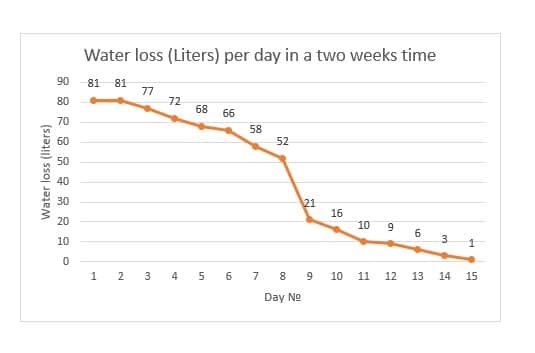
The table below shows a real-world example of how water loss reduces significantly as the wood swells and gaps seal over the first two weeks of use. This is completely normal for a new cedar or wood-fired hot tub and is not a sign of a structural defect.
| Day | Water Loss (Liters) | Water Level Reduction (cm) |
|---|---|---|
| 1 | 81 | 7.5 |
| 2 | 81 | 7.5 |
| 3 | 77 | 6.5 |
| 4 | 72 | 6.5 |
| 5 | 68 | 6 |
| 6 | 66 | 6 |
| 7 | 58 | 5.5 |
| 8 | 52 | 5 |
| 9 | 21 | 2 |
| 10 | 16 | 1.5 |
| 11 | 10 | 1 |
| 12 | 9 | 1 |
| 13 | 6 | 0.5 |
| 14 | 3 | 0.3 |
| 15 | 1 | 0.1 |
If you still have questions about what to expect from cedar hot tub ownership, including water treatment, filtration, and winter use, visit our Cedar Hot Tub FAQ for answers to the most common questions. And if you're still deciding whether a wood-fired setup is the right choice for your property, Are Wood-Fired Hot Tubs Worth The Work? is worth reading before you commit.